


The Pros and Cons of Using 2UD and 4UD UHMWPE Fabrics
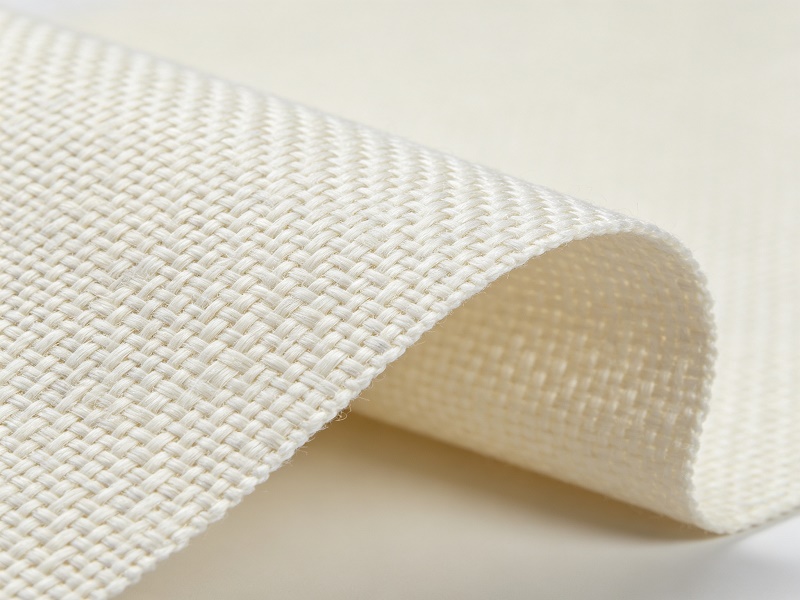
Every engineer and procurement specialist working with ballistic composites eventually faces the same question: should I use 2UD or 4UD? Both are built on UHMWPE woven fabric — one of the most advanced technical textiles ever developed, combining steel-grade strength with near-featherweight density. But their internal architectures are different enough to produce meaningfully different performance outcomes in the field.
Picking the wrong format doesn't just affect protection levels. It impacts your weight budget, unit economics, certification success rate, and production throughput. This guide gives you a clear, honest breakdown of both architectures — what they genuinely do well, where they fall short, and which applications suit each — so you can make a sourcing decision you'll be confident in.
Key Takeaways
2UD stacks two fiber layers at 0° and 90°, producing a lightweight, flexible, and cost-efficient composite sheet.
4UD adds two more layers at +45° and −45°, creating balanced multi-directional strength with fewer plies needed.
2UD UHMWPE woven fabric is the go-to for soft armor, flexible composites, cut-resistant apparel, and marine safety systems.
4UD excels in hard armor plates, vehicle and vessel armor, aerospace structures, and high-threat ballistic applications.
The right choice depends on your threat profile, weight tolerance, and budget — not on which format has a longer list of properties.
Topweaving manufactures both configurations with full OEM customization and 48-hour sample dispatch.
1. What Do "2UD" and "4UD" Actually Mean?
Before comparing performance, it helps to understand what you're actually looking at when someone hands you a sheet of UD UHMWPE woven fabric.
UD stands for unidirectional — a configuration where all fibers in a single layer are aligned in exactly one direction, running parallel without interlacing. Unlike traditional woven textiles where yarns cross over and under each other, UD layers keep every filament perfectly straight. This eliminates the mechanical weak points created by crimp at interlacing points, allowing UHMWPE fiber to deliver closer to its theoretical tensile strength.
The number before "UD" indicates how many differently-oriented layers are laminated together into a single bonded sheet:
2UD Structure
Two unidirectional layers are stacked at 0° and 90°, bonded together using a thin thermoplastic film. The result is a biaxial sheet — resistant to forces applied from two principal directions. It's comparatively thin, pliable, and fast to process. Areal weights typically fall in the range of 50–200 g/m² depending on the application.
4UD Structure
Four unidirectional layers are stacked at 0°, 90°, +45°, and −45°, again bonded through film lamination. This quasi-isotropic configuration distributes energy across all in-plane directions simultaneously. It's thicker, stiffer, and heavier than its 2UD counterpart — but it handles oblique-angle threats and multi-hit scenarios more effectively with fewer total plies needed in the final lay-up.
This structural difference drives everything else: ballistic performance, weight, drapeability, cost, and processing behavior.
2. Pros & Cons of 2UD UHMWPE Woven Fabric
✅ Advantages
Lowest areal density among UD formats
High drapeability — conforms to curves easily
Lower cost per square meter
Faster production and lamination cycle times
Proven for NIJ IIA–IIIA soft armor applications
Ideal for wearable and flexible protective products
⚠️ Limitations
More plies required to reach high protection levels
Weaker response to oblique-angle impacts
Lower structural rigidity for panel applications
Partial weight advantage narrows with high ply counts
Lightweight and Flexible — a Real Advantage
Because only two fiber layers are present, 2UD composite sheets achieve significantly lower areal density. Body armor inserts, cut-resistant gloves, and marine safety sleeves made from this material are lighter and more comfortable to wear for extended periods. The thinner laminate also bends and drapes across curved surfaces without requiring additional cutting or goring — a practical benefit when you're conforming fabric to shoulder panels, helmet interiors, or complex mold geometries.
Cost Efficiency at Scale
Fewer raw material layers and a simpler bonding process translate into a lower per-square-meter cost. For large-area applications — cut-resistant workwear, marine reinforcement sleeves, composite sporting goods — this difference is meaningful at commercial volumes. Processing speed is faster too, since thinner sheets consolidate more quickly in hot-press and autoclave systems.
Where It Falls Short
Two fiber orientations means two energy-absorption pathways. Threats arriving at oblique angles — fragmentation at 30°, 45°, or 60° — encounter less fiber reinforcement than they would in a four-direction configuration. For applications where rifle-level or multi-angle ballistic threats are expected, 2UD requires significantly more plies to achieve NIJ Level III performance, partially offsetting its weight and cost advantages.
3. Pros & Cons of 4UD UHMWPE Woven Fabric
✅ Advantages
Quasi-isotropic — even strength from any in-plane direction
Fewer plies needed for NIJ III and IV protection
Lower backface deformation (BFD) in hard armor panels
Higher structural rigidity for composite plate applications
Better resistance to delamination under multi-hit impacts
Improved dimensional stability under sustained loads
⚠️ Limitations
Higher areal density and cost per square meter
Reduced drapeability — less suitable for curved shapes
Longer consolidation and processing times
Heavier in wearable applications
Multi-Directional Protection — the Core Benefit
The two additional fiber layers at ±45° create mechanical pathways that intercept threats arriving from virtually any in-plane direction. In V50 ballistic testing, 4UD layups show more consistent performance across varied projectile approach angles — a critical factor in military procurement specifications where multi-hit and multi-angle performance must be demonstrated. For hard armor plates, this architecture also reduces BFD, which measures how far the armor deflects toward the wearer's body even when penetration is stopped.
Fewer Plies to Certification
When engineering hard armor to NIJ Level III or higher, a 4UD configuration typically reaches the target protection level with fewer total plies than a comparable 2UD layup. This leads to thinner plates, compressed production schedules, and in many cases a more cost-effective route to a finished certified product — even though the per-sheet price is higher.
Where It Falls Short
The additional layers create a stiffer, less conformable sheet. Wrapping 4UD material around tight helmet radii or complex armor curvatures is considerably more difficult than working with 2UD. For soft armor, curved protective inserts, or applications where the user's comfort depends on a flexible, body-conforming panel, the stiffness of 4UD is a real practical constraint.
4. 2UD vs. 4UD — Side-by-Side Comparison
| Property | 2UD UHMWPE Woven Fabric | 4UD UHMWPE Woven Fabric |
|---|---|---|
| Fiber Orientations | 0° / 90° | 0° / 90° / +45° / −45° |
| Areal Density | Lower | Higher |
| Drapeability / Flexibility | High | Moderate–Low |
| Multi-Directional Strength | Biaxial (moderate) | Quasi-isotropic (excellent) |
| Plies Required for NIJ IIIA | More | Fewer |
| Achievable Ballistic Level | NIJ IIA – IIIA | NIJ III – IV |
| BFD Performance | Moderate | Superior |
| Delamination Resistance | Moderate | High |
| Unit Cost per m² | Lower | Higher |
| Processing Cycle Time | Faster | Longer |
| Structural Rigidity | Lower | Higher |
| Primary Applications | Soft armor, flexible composites, protective apparel | Hard armor plates, vehicle armor, aerospace panels |
5. Which Applications Suit Each Format?
Best Uses for 2UD
Soft Body Armor: Concealable vests, ballistic inserts, and flexible panels for handgun threat levels (NIJ IIA–IIIA)
Cut-Resistant Workwear: EN388 Level 5 gloves, slash-resistant uniforms, bite-resistant protective clothing
Marine & Offshore Equipment: Anti-chafing sleeves for mooring lines, net reinforcements, containment barriers
Sports & Outdoor Gear: Racing sails, mountaineering packs, protective insoles, lightweight structural backings
Flexible Composite Reinforcements: Applications requiring fabric to conform to curves or complex mold geometries
Best Uses for 4UD
Hard Armor Plates: Military SAPI/ESAPI inserts and law enforcement rifle-threat plates (NIJ III–IV)
Vehicle & Vessel Armor: Blast shields, side armor panels, APC and naval vessel protection
Helmet Shells: Ballistic helmet composite layups requiring multi-hit and multi-angle certification
Aerospace Structures: Lightweight struts, panel reinforcements, parachute harness brackets
Industrial Liners: Conveyor belt wear surfaces, mining equipment linings, pressure vessel reinforcements
Hybrid Designs: Using Both Together
Many advanced armor and composite systems combine both formats strategically. A hybrid vest might use 4UD sheets for the rigid plate carrier insert (rifle-threat protection) alongside 2UD soft panels covering the torso (handgun protection) — delivering optimized weight and coverage without overengineering any single zone. For complex applications like this, discussing the design with a technical team before finalizing your specification can save significant cost and development time.
6. How to Make the Right Choice
Three questions will guide nearly every selection decision:
① What is the actual threat environment? If your product must stop rifle rounds, multi-angle fragmentation, or concentrated high-energy impacts, 4UD delivers the multi-directional energy dispersion that 2UD cannot match efficiently. If your threat environment is cuts, abrasion, or handgun-level ballistic threats, 2UD covers the requirement at lower weight and cost.
② What are your weight and geometry constraints? Wearable products have strict weight tolerances. Prolonged use makes every extra gram felt. If your end user carries or wears the product for hours at a time, 2UD's lighter, more flexible profile matters. For vehicle or structural applications, those constraints largely disappear and 4UD's superior protection efficiency becomes the priority.
③ What is your total cost target per certified unit? 2UD costs less per sheet but may require more plies — narrowing the price gap at high protection levels. 4UD costs more per sheet but may require fewer plies, sometimes making it more economical per finished hard armor panel. Model both scenarios before committing.
When uncertainty remains, the most practical step is to request samples in both formats, build evaluation layups at your target ply counts, and compare performance data directly. A reliable UHMWPE woven fabric supplier should facilitate this quickly.
Why Industry Professionals Choose Topweaving for UHMWPE Woven Fabric
At Topweaving, we've spent over 15 years focused exclusively on high-performance technical textiles — with UHMWPE woven fabric as the cornerstone of our product range. Our ISO-certified facility in Changzhou, Jiangsu produces up to 2,000,000 m² per month, supplying defense contractors, composite manufacturers, and industrial buyers across more than 40 countries.
We manufacture both 2UD and 4UD configurations with full OEM/ODM flexibility:
Areal weights from 7.5 g/m² to 300+ g/m² — customized to your lay-up specification
Custom fiber grade, bonding matrix type, and roll width
Global TÜV-certified supply chain with batch-traceable quality documentation
ASTM D4884 ballistic test compliance; FDA-compatible polymer purity
48-hour sample dispatch for verified OEM/ODM evaluations
Scalable pricing and consistent delivery for high-volume contracts
From your first evaluation sample to a full production contract, Topweaving's technical team will help you select the right configuration, validate it against your application requirements, and ensure your supply chain is secure at scale.
Get Free Samples & Technical Specs →Browse All UHMWPE Fabric Products →Frequently Asked Questions
Q1: What is UHMWPE woven fabric and why is it used in protective applications?
It's a technical textile made from ultra-high molecular weight polyethylene — a fiber that delivers tensile strength 15× that of steel at roughly one-third the weight. Its combination of extreme strength, chemical inertness, and low density makes it the material of choice for body armor, ballistic composites, marine equipment, and industrial protective systems globally.
Q2: What does "UD" mean — and why does the fiber direction matter?
UD stands for unidirectional — all fibers in that layer run in a single direction with no interlacing, which preserves maximum tensile strength. The number of layers and their orientations (2UD vs. 4UD) determine how well the fabric resists forces arriving from different angles. More directional layers means more balanced, multi-angle protection.
Q3: Which is lighter — 2UD or 4UD?
2UD is lighter because it has fewer fiber layers and lower areal density. For wearable products — vests, gloves, portable protective panels — where every gram affects user comfort and performance, 2UD is the standard choice.
Q4: Can 2UD achieve the same protection level as 4UD?
Yes, but with more plies. 2UD can reach NIJ IIIA (soft armor, handgun threats) reliably with sufficient ply count. For NIJ Level III or IV (rifle threats, hard armor), 4UD reaches the target more efficiently with fewer layers — translating to thinner, lighter finished plates.
Q5: Is 4UD suitable for curved or flexible armor applications?
Not ideally. The four-layer construction makes 4UD considerably stiffer than 2UD. It excels in flat or near-flat rigid panels. For curved geometries — helmet shells, shoulder armor, body-conforming inserts — 2UD's greater drapeability is a meaningful practical advantage.
Q6: Is 4UD always more expensive than 2UD?
Per square meter, yes. But the total cost per finished armor panel depends on how many plies you need. 4UD's higher protection efficiency per ply sometimes makes it the more cost-effective route to a certified hard armor product, even with the higher per-sheet price. Running a ply-count comparison for your specific application is the only reliable way to determine which is more economical.
Q7: Can I get custom specifications for both formats from Topweaving?
Yes. Topweaving produces both 2UD and 4UD configurations in fully customized areal weights (7.5–300+ g/m²), fiber grades, bonding matrices, and widths. Samples are dispatched within 48 hours, and large-volume OEM/ODM orders are supported with TÜV-certified documentation and batch-traceable quality records. Contact our team to get started.
Q8: What certifications should I look for when sourcing UHMWPE woven fabric?
For ballistic applications, look for ASTM D4884 test compliance and NIJ-aligned V50 data. For quality assurance, TÜV certification and batch-traceable documentation are the industry benchmarks. For medical or food-contact composite applications, FDA-compatible polymer purity documentation is also required. Topweaving holds all of the above.
Ready to Source the Right Configuration?
Whether your project calls for the lightweight flexibility of 2UD or the multi-directional strength of 4UD UHMWPE woven fabric, Topweaving has the manufacturing depth, certifications, and technical expertise to supply exactly what you need — at volume, to spec, on time. Take the next step and let our team help you make the right call.