


What Are the Main Types of Hybrid Fabric Used in Textiles?
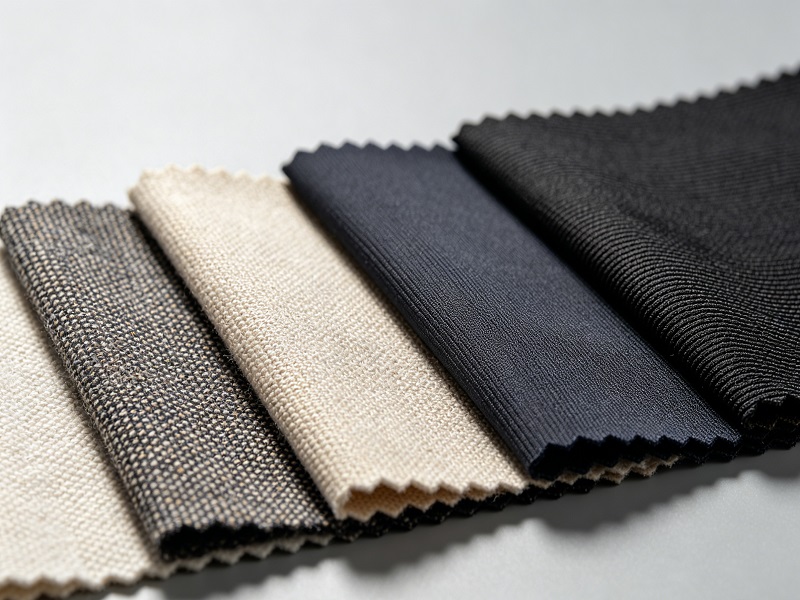
If you've spent any time sourcing technical textiles, you've probably noticed that "hybrid fabric" means very different things depending on who you ask. To a fashion brand, it might be a cotton–polyester blend. To an engineer designing a ballistic panel or a wind-turbine blade, it's a carefully engineered woven structure that combines UHMWPE, aramid, carbon, and glass fibres in a single architecture—sometimes 3 to 4 different yarns in one weave, as we do at Topweaving.
The confusion is understandable. Hybrid fabrics sit at the intersection of material science, weaving engineering, and end-use performance. Get the combination right, and you get stiffness plus impact resistance plus weight savings that no single fibre can deliver. Get it wrong, and you're left with a laminate where the interface fails long before either fibre reaches its limit.
In this guide, we'll break down the main types of hybrid fabric used across the textile industry, from conventional apparel blends to high-performance woven hybrids for ballistic, automotive, marine, and composite applications. The goal is simple: help you understand which hybrid fits what, and what to ask a manufacturer before you order.
Key Takeaways
Hybrid fabric = two or more fibre types combined to offset each other's weaknesses and amplify strengths.
In technical textiles, the big four combinations are UHMWPE–Aramid, Carbon–Glass, Carbon–Aramid, and UHMWPE–Carbon—each serving different performance priorities (ballistic, stiffness, cost, weight).
Woven hybrid (where different yarns are interlaced in the same weave) gives more predictable load transfer than simple layering—critical for ballistic and structural parts.
At Topweaving, we weave 3–4 yarn types into one fabric, even multiple yarns in a single direction, for tailored strength-to-weight and multi-threat performance.
Choosing the right hybrid isn't just about fibre—it's about stacking sequence, resin compatibility, and areal weight.
First: What Counts as a Hybrid Fabric?
Not all hybrids are created equal. In the textile industry, the term generally covers two broad families:
1. Apparel / commodity blends – Cotton–polyester, wool–acrylic, linen–viscose, silk–lyocell, nylon–spandex. These are blended at the yarn stage (different fibres spun together) or interwoven to balance comfort, cost, and durability. They dominate fashion and home textiles.
2. Technical / performance woven hybrids – UHMWPE, aramid, carbon, glass, and other high-tenacity fibres woven or laminated together for engineering performance: ballistic protection, structural stiffness, impact absorption, corrosion resistance. This is where the real material-science leverage sits, and where a manufacturer's weaving capability matters.
Why the distinction matters: If you're buying for a clothing line, a blend works. If you're designing a body-armour panel, a wind-blade spar cap, or an EV battery enclosure, you need a structural hybrid—usually woven, sometimes unidirectional laminated—with controlled fibre orientation and predictable interface behaviour.
The rest of this article focuses on the technical side, because that's where the "main types" question gets interesting (and where most buyers still guess).
The 4 Main Types of Technical Hybrid Fabric
Below is the practical taxonomy used by composite engineers and protective-gear specifiers. Each type pairs fibres so that fibre A's weakness is covered by fibre B.
1. UHMWPE–Aramid Hybrid (Ballistic & Soft Armour)
Ultra-High-Molecular-Weight Polyethylene (UHMWPE) is the lightest structural fibre—density under 1.0 g/cm³, it floats on water, and it offers exceptional cut and abrasion resistance. Aramid (para-aramid) brings heat resistance (up to ~450 °C) and proven energy absorption.
Why hybridise?
Pure UHMWPE softens around 145 °C—problematic near engines or hot climates.
Pure aramid is heavier and more expensive per unit of ballistic stopping power.
Typical layup: [U/A/U/A] cross-ply for NIJ Level IIIA soft armour; [A/U/U/A] when heat exposure is a concern (engine bays, vehicle spall liners).
Applications: body armour, vehicle spall liners, blast blankets, cut-resistant gloves, anti-theft panels.
Aramid/UHMWPE hybrid laminates are now the standard for modern soft ballistic solutions, often paired with ceramic strike faces for rifle threats.
2. Carbon–Glass Hybrid (Stiffness + Cost Control)
Carbon delivers high modulus and low weight; glass brings impact toughness, electrical insulation, and—crucially—lower cost. A carbon–glass hybrid can cut material cost by up to 25% versus 100% carbon, while retaining most of the stiffness.
Two sub-variants matter:
Interply hybrid – separate carbon and glass plies stacked in sequence (e.g.
[G/C/C/G]).Intraply hybrid – carbon and glass yarns interwoven in the same fabric. Intraply tends to give better damage tolerance; interply is easier to tune for stiffness vs. cost.
Applications: wind-turbine blades (carbon near the root/leading edge, glass elsewhere), marine hulls, automotive body panels, sports equipment (tennis rackets, bike frames), bridge strengthening.
Stacking sequence changes everything: placing glass on the exterior and carbon on the interior actually yields higher tensile strength than the reverse in some epoxy systems. A good manufacturer will run the numbers with you.
3. Carbon–Aramid Hybrid (Stiffness + Impact)
Carbon handles tension and stiffness; aramid absorbs impact energy and resists puncture. The classic layup: carbon outer / aramid inner ([C/A/A/C]) for parts that need shape and survivability.
Applications:
Automotive: EV battery enclosures (carbon outside for stiffness, aramid inside for puncture resistance).
Aerospace: leading edges, fairings, interior panels where ground-equipment impact is a risk.
Drones & UAVs: arms and frames where a crash shouldn't mean total loss.
Marine racing: sailboat hulls (carbon for rig-load stiffness, aramid for debris strikes).
4. UHMWPE–Carbon Hybrid (Ultra-Lightweight Structural)
The most specialised combo. Carbon gives stiffness; UHMWPE gives absurd strength-to-weight (8x steel by weight) and low density. The catch: UHMWPE has a low melt point (~80–145 °C), so resin cure must stay low-temp, and you can't post-cure the way you would a pure carbon part.
Applications: hypercar body panels, aerospace secondary structures, high-end robotics tendons, specialty marine cordage (though UHMWPE is more common in rope than woven marine composites).
A common failure mode: engineers try to post-cure a carbon/UHMWPE hybrid at 120 °C and lose half the UHMWPE layer's strength. Match the resin system to the weakest fibre, not the strongest.
Quick Reference Table
| Hybrid Type | Core Fibres | What You Gain vs. Single Fibre | Typical Applications |
|---|---|---|---|
| UHMWPE–Aramid | UHMWPE + para-aramid | Ballistic stopping + heat tolerance + cut resistance | Soft armour, spall liners, blast blankets |
| Carbon–Glass | Carbon + E-glass | Stiffness + 25% cost saving + impact toughness | Wind blades, marine, auto, sports |
| Carbon–Aramid | Carbon + aramid | Stiffness + impact/puncture absorption | EV battery boxes, UAV arms, aerospace interiors |
| UHMWPE–Carbon | UHMWPE + carbon | Lowest weight + high stiffness | Hypercar panels, robotics, aerospace sec. struct. |
| Cotton–Polyester (apparel) | Cotton + PET | Breathability + wrinkle resistance | Shirts, uniforms, workwear |
| Nylon–Spandex (apparel) | Nylon + elastane | Durability + stretch recovery | Activewear, leggings |
The bottom two rows are "commodity hybrids"—important in volume, but chemically and structurally simpler than the top four.
Woven Hybrid vs. Simple Layering: Why the Weave Matters
A lot of suppliers will sell you separate rolls of UHMWPE and aramid and tell you to stack them. That's interply hybridisation, and it works—but it leaves the interface entirely dependent on the resin and the laminator's skill.
A woven hybrid (different yarns interlaced in the same weave) does three things better:
Load transfer is built in – fibres are already mechanically locked before resin goes in.
Drape and handle are more predictable for complex moulds.
Multi-yarn integration – at Topweaving, we can weave 3–4 yarn types into one fabric, even multiple yarns in a single direction (warp or weft). That means you can, say, run UHMWPE + aramid in the warp for ballistic, carbon in the weft for stiffness—all in one loom state.
For buyers specifying ballistic panels or structural composites, that level of control usually translates into fewer plies, cleaner nesting, and more repeatable ballistics or FEA results.
How to Choose the Right Hybrid (the Questions We Ask Customers)
When a purchaser comes to us, the conversation usually runs through these five filters:
What's the primary threat or load? Tension/stiffness → carbon; impact/ballistic → aramid or UHMWPE; cost-cap → glass.
What's the heat environment? Above 145 °C → keep UHMWPE out. Below 80 °C cure → carbon/UHMWPE feasible.
Weight budget? UHMWPE beats everything on strength-to-weight; carbon beats everything on stiffness-to-weight.
Resin system? The cure temp is capped by your lowest-temp fibre. Plan accordingly.
Volume & customisation? Standard architectures (C/G 60/40, U/A cross-ply) ship fast; fully custom yarn mixes need sampling.
At Topweaving, we run requirement analysis → technical solution → sample development & testing → mass production → QC & delivery. If you know the threat level or the FEA envelope, we can propose the yarn mix and weave; if you don't, we'll walk you back from the performance target to the fibre choice.
FAQ: What Buyers Ask Most About Hybrid Fabrics
Q1: Is a "hybrid fabric" the same as a "blend"?
Not exactly. In apparel, "blend" usually means different fibres spun into the same yarn. In technical textiles, "hybrid" more often means different yarns woven together or different plies laminated together. Woven hybrids give you more control over fibre orientation and load paths.
Q2: Can you really put UHMWPE and carbon in the same woven fabric?
Yes—but the resin cure must respect UHMWPE's temperature limit (ideally ≤ 80 °C). The payoff is extreme strength-to-weight. It's a niche combo, mostly for ultra-light structural parts.
Q3: Which hybrid is best for ballistic vests?
Most modern soft armour uses UHMWPE–aramid hybrid in cross-ply. More UHMWPE for lightweight IIIA; more aramid if heat or UV exposure is a factor. Hard armour adds a ceramic strike face.
Q4: Why not just use 100% carbon everywhere?
Because carbon is brittle in impact and pricey. A carbon–glass or carbon–aramid hybrid can hit 90% of the stiffness at 60–75% of the cost, with better damage tolerance.
Q5: How many different yarns can you weave into one hybrid fabric?
At Topweaving, we regularly weave 3–4 yarn types into a single weave, and can run multiple yarns in one direction (e.g. two different warps). That lets you hit multi-objective specs—ballistic + stiffness + cost—in one fabric rather than a 6-ply stack.
Q6: Do you supply off-the-shelf hybrids or only custom?
Both. We carry standard constructions (UHMWPE–aramid ballistic weave, C/G 60/40, etc.) and run fully custom R&D programmes for large-scale purchasers who need a tailored strength-to-weight profile.
Why Topweaving for Your Hybrid Fabric
Hybrid fabric isn't a commodity—it's a design choice disguised as a material. The difference between a [C/G/G/C] stack and a [G/C/C/G] stack, or between a laminated hybrid and a woven one, shows up in the test report and on the balance sheet.
As a China-based hybrid woven fabric manufacturer, Topweaving controls the process from yarn to woven cloth: we can integrate UHMWPE, aramid, carbon, glass—even 3–4 yarn types in one weave—with strict QC at every stage. If you're specifying for ballistic, automotive, marine, wind energy, or aerospace, and you need a partner who can move from threat/load brief → sample → volume without losing fibre orientation control, that's where we fit.
Next step:send us your performance target (threat level, stiffness, weight ceiling, or cost cap) and we'll propose the hybrid architecture—yarns, areal weight, weave—within 3–5 working days.