


Why UHMWPE Woven Fabric Is Preferred for Lightweight and High-Strength Needs
Introduction
In the world of high-performance technical textiles, few materials have made as significant an impact as UHMWPE woven fabric. Ultra-High Molecular Weight Polyethylene—the polymer behind this extraordinary fabric—has transformed industries ranging from ballistic protection to marine engineering, aerospace, and industrial safety.
What makes UHMWPE woven fabric so exceptional? The answer lies in a single, compelling combination: unmatched strength at minimal weight. This fabric delivers tensile strength up to 15 times that of steel on an equal-weight basis, yet it floats on water. For engineers, procurement specialists, and product designers, this strength-to-weight ratio is nothing short of revolutionary.
But UHMWPE woven fabric is more than just strong and light. It offers chemical resistance that withstands acids and solvents, abrasion resistance that outlasts carbon steel by 7 to 10 times, and a friction coefficient as low as 0.1. Whether you are developing cut-resistant gloves, lightweight armor systems, deep-sea mooring sleeves, or high-performance outdoor gear, UHMWPE woven fabric consistently emerges as the preferred choice.
This article explores why UHMWPE woven fabric dominates lightweight and high-strength applications. We will examine its core properties, compare it with alternative materials, and show you how to select the right UHMWPE woven fabric for your specific needs.
Key Takeaways
UHMWPE woven fabric offers a strength-to-weight ratio 15 times greater than steel and 40% higher than aramid textiles, making it the ultimate material for weight-critical applications.
With a density of just 0.97–0.98 g/cm³, UHMWPE woven fabric naturally floats on water and is one-third lighter than aramid alternatives.
The fabric exhibits exceptional chemical and environmental stability, resisting acids, alkalis, solvents, and UV radiation without degradation.
Abrasion resistance is superior to nylon and carbon steel, delivering 4 times the wear life of heavy-duty nylon and 7 to 10 times that of carbon steel in high-rub scenarios.
UHMWPE woven fabric is highly customizable—available in plain, twill, satin, and multi-layer 3D weaves with adjustable GSM and width.
Leading manufacturers like Topweaving offer TUV-certified production, rapid prototyping within 48 hours, and monthly capacity up to 2 million square meters.
What Is UHMWPE Woven Fabric?
Understanding the Material
UHMWPE woven fabric is a technical textile produced from Ultra-High Molecular Weight Polyethylene fibers. The "ultra-high molecular weight" designation means the polymer chains are significantly longer than those in conventional polyethylene. This extended molecular structure gives the material its extraordinary toughness, durability, and resistance to chemical attack.
The fibers are produced through a gel-spinning process, which aligns the polymer chains in a highly oriented manner. This orientation maximizes tensile strength while maintaining a remarkably low density. These filaments are then woven into fabric form using advanced tension-controlled weaving technologies, preserving the fiber's mechanical integrity without the need for brittle chemical coatings.
From Fiber to Fabric
The transformation from UHMWPE fiber to UHMWPE woven fabric is a precision engineering process. High-quality gel-spun filaments are fed into weaving looms where they are interlaced—warp and weft—to create a stable, cohesive textile matrix. The weaving architecture can be customized to meet specific performance requirements:
Plain weave – Offers balanced strength and stability for general applications
Twill weave – Provides enhanced drape and conformability for complex shapes
Satin weave – Delivers superior smoothness and flexibility
Multi-layer 3D weaving – Enables spatial reinforcement for extreme load-bearing applications
Unlike coated or laminated materials, pure UHMWPE woven fabric maintains the fiber's maximum dynamic flexibility and chemical integrity. This "uncoated" approach ensures that the fabric's inherent properties are fully preserved.
Why UHMWPE Woven Fabric Excels in Lightweight Applications
The Density Advantage
Weight is a critical constraint in virtually every engineering discipline. Whether you are designing an aircraft component, a wearable armor system, or a deep-sea mooring line, every gram matters.
UHMWPE woven fabric has a density of just 0.97–0.98 g/cm³. To put this in perspective:
Water has a density of 1.0 g/cm³—meaning UHMWPE woven fabric actually floats.
Aramid fibers (e.g., para-aramid) have a density of approximately 1.44 g/cm³.
Steel has a density of approximately 7.85 g/cm³.
This means UHMWPE woven fabric is one-third lighter than aramid alternatives on a volume basis. For applications where weight reduction translates directly into improved performance—faster vessels, more maneuverable aircraft, less fatiguing protective gear—this density advantage is transformative.
Strength-to-Weight Ratio: The Real Metric
Lightweight alone is not enough; the material must also deliver strength. UHMWPE woven fabric achieves a specific tensile strength 15 times that of conventional steel and 40% higher than premium aramid textiles on an equal-weight basis.
The core filaments feature a breaking strength reaching up to 43 cN/dtex and a tensile modulus of 1800 cN/dtex. These figures mean that UHMWPE woven fabric can support enormous loads while adding minimal mass to the overall system.
Weight Savings in Real-World Applications
Consider a ballistic vest: replacing aramid with UHMWPE woven fabric can reduce the vest's weight by approximately 30% while maintaining or improving ballistic performance. For a soldier or law enforcement officer wearing that vest for hours at a time, this weight reduction directly impacts mobility, endurance, and mission effectiveness.
Similarly, in marine applications, UHMWPE woven fabric ropes and sleeves provide the same strength as steel wire rope at one-eighth the weight—a game-changer for deep-sea operations where handling heavy equipment is challenging and dangerous.
Why UHMWPE Woven Fabric Dominates High-Strength Requirements
Exceptional Tensile Strength
The primary reason UHMWPE woven fabric is preferred for high-strength needs is its extraordinary tensile performance. The gel-spun filaments used in Topweaving's UHMWPE woven fabric achieve breaking strengths up to 43 cN/dtex.
This tensile strength translates into real-world performance:
Ballistic protection: UHMWPE woven fabric serves as the ultra-reliable woven substrate for bullet-resistant vests, hard armor composite backings, spall liners, and tactical shields. The fabric's high energy dispersion helps armor developers reduce backface deformation (BFD)—a critical safety metric.
Cut resistance: UHMWPE woven fabric is heavily used to manufacture EN388 Level 5 cut-resistant gloves, bite-resistant clothing, and slash-proof uniforms.
Load-bearing applications: From high-modulus parachute cord sleeves for spacecraft reentry systems to lightweight impact-resistant liners in drones, UHMWPE woven fabric delivers extreme load handling under negligible mass budgets.
Unrivaled Abrasion and Wear Resistance
Strength under tension is only part of the story. In many applications, the fabric must also withstand constant rubbing, friction, and abrasive wear.
UHMWPE woven fabric exhibits the highest wear resistance among technical polymers. It lasts:
4 times longer than heavy-duty nylon in high-wear scenarios
7 to 10 times longer than carbon steel in high-rub applications
With a friction coefficient as low as 0.1, UHMWPE woven fabric acts as an ideal dry-lubricating barrier. This low friction not only reduces wear but also minimizes energy loss in dynamic systems—making it invaluable for conveyor belt linings, storage chute protectors, and flexible lifting slings.
Chemical and Environmental Stability
High-strength materials are useless if they degrade in harsh environments. UHMWPE woven fabric is inherently hydrophobic and chemically inert. It resists:
Intense acids and strong alkalis
Organic solvents
Extended ultraviolet (UV) radiation without fiber degradation
This chemical stability makes UHMWPE woven fabric suitable for applications that would quickly destroy other materials. In offshore environments, the fabric resists severe saltwater corrosion, biofouling, and long-term UV weathering. In medical applications, its biocompatible attributes enable its use in orthopedic reinforcement fibers and high-strength surgical suture braids.
UHMWPE Woven Fabric vs. Alternative Materials
| Property | UHMWPE Woven Fabric | Aramid | Steel | Nylon |
|---|---|---|---|---|
| Density (g/cm³) | 0.97–0.98 | ~1.44 | ~7.85 | ~1.14 |
| Strength-to-Weight Ratio | 15x steel | 40% lower than UHMWPE | Baseline | Significantly lower |
| Abrasion Resistance | 4x nylon; 7–10x steel | Moderate | Good | Baseline |
| Friction Coefficient | As low as 0.1 | Moderate | High | Moderate |
| Chemical Resistance | Excellent (acids, alkalis, solvents) | Good | Poor (corrodes) | Moderate |
| UV Resistance | Excellent | Moderate | Good | Poor |
| Floatation | Floats on water | Sinks | Sinks | Sinks |
This comparison makes it clear: UHMWPE woven fabric offers a unique combination of properties that no single alternative material can match.
Key Applications of UHMWPE Woven Fabric
1. Personal Protection and Tactical Systems
UHMWPE woven fabric is the material of choice for ballistic helmets, hard armor composite backings, spall liners, and tactical shields. Its ability to disperse energy and reduce backface deformation makes it essential for modern armor systems.
For industrial safety, the fabric is used in EN388 Level 5 cut-resistant gloves, bite-resistant clothing, and slash-proof uniforms—protecting workers in high-risk environments.
2. Marine Hardware and Deep-Sea Operations
In offshore environments, UHMWPE woven fabric is deployed as heavy-duty anti-chafing sleeves for high-tensile mooring lines, commercial deep-sea fishing net reinforcements, and maritime containment barriers. The fabric's resistance to saltwater corrosion, biofouling, and UV weathering protects critical ocean engineering investments.
3. Aerospace and Heavy Industry
From parachute cord sleeves for spacecraft reentry systems to lightweight impact-resistant liners in drones, UHMWPE woven fabric delivers extreme load handling under minimal mass. In heavy industries like mining and chemical processing, the fabric is used in conveyor belt linings, storage chute protectors, and lifting slings to curb equipment wear and reduce operational energy costs.
4. Medical Textiles and Sports Gear
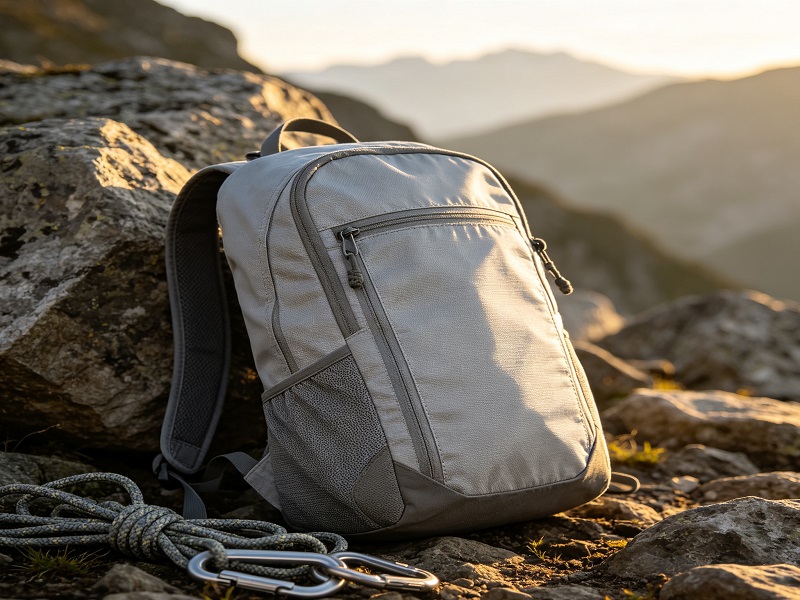
Leveraging its biocompatible attributes, UHMWPE woven fabric is used in medical-grade orthopedic reinforcement fibers and high-strength surgical suture braids. In the commercial sector, it serves as a premium material platform for racing sails, mountaineering backpacks, and lightweight extreme winter sports gear.
How to Choose the Right UHMWPE Woven Fabric
Selecting the right UHMWPE woven fabric for your application requires careful consideration of several factors:
1. Weave Architecture
Different weaves offer different performance characteristics:
Plain weave – Best for applications requiring dimensional stability and balanced properties
Twill weave – Ideal for applications needing better drape and conformability
Satin weave – Suitable for applications requiring maximum flexibility and smoothness
Multi-layer 3D weave – Essential for extreme load-bearing and impact resistance
2. Weight (GSM) and Width
UHMWPE woven fabric is fully customizable according to client specifications. The weight (grams per square meter) and width should be tailored to your specific production line and end-use requirements.
3. Regulatory Certifications
For critical applications, ensure your supplier provides batch-traceable raw material logs and relevant certifications. Topweaving's UHMWPE woven fabric is produced on TUV-certified production lines and meets FDA-compliant polymer purity standards.
4. Supplier Capabilities
Choose a manufacturer with:
Proven technical expertise – Deep experience in advanced weaving and material science
Scalable production capacity – Ability to meet volume requirements without compromising quality
Rapid prototyping – Quick turnaround for sample development and testing
End-to-end quality control – From raw material to finished fabric
Why Topweaving Is Your Trusted UHMWPE Woven Fabric Partner
When it comes to sourcing UHMWPE woven fabric, partnering with the right manufacturer is critical. Topweaving—Changzhou Topweaving New Material Technology Co., Ltd.—stands out as a premier, innovation-driven manufacturer specializing in the research, development, and production of high-performance technical textiles.
Here is why leading global buyers choose Topweaving for their UHMWPE woven fabric needs:
Global Scale with TUV-Certified Supply Chain
Topweaving operates a certified sprawling industrial hub with a monthly output of up to 2 million square meters of high-tenacity technical fabric. This massive capacity ensures contract buyers benefit from reliable delivery timelines and scalable pricing.
15 Years of Dedicated Deep Processing
With extensive tenure in advanced weaving, Topweaving can manipulate complex warp/weft densities and formulate tailored specifications for demanding applications—from marine engineering and defense contracts to aerospace trials.
Comprehensive OEM/ODM and Prototype Support
Topweaving actively facilitates engineering trials. Their technical team can match custom fiber architectures and issue physical samples within 48 hours to accelerate your R&D evaluation cycle.
End-to-End Manufacturing Excellence
From raw material to woven fabric, Topweaving ensures quality, consistency, and supply chain security. Their cross-disciplinary R&D team delivers tailored solutions and next-generation textiles.
Topweaving is not just a supplier; they are a technical partner committed to transforming advanced fabrics into reliable, application-critical solutions.
Frequently Asked Questions
Q1: What is UHMWPE woven fabric?
UHMWPE woven fabric is a technical textile made from Ultra-High Molecular Weight Polyethylene fibers. It offers exceptional strength-to-weight ratio, chemical resistance, and durability, making it ideal for ballistic protection, marine hardware, aerospace components, and industrial safety applications.
Q2: How strong is UHMWPE woven fabric compared to steel?
UHMWPE woven fabric has a specific tensile strength approximately 15 times that of steel on an equal-weight basis. This means a given weight of UHMWPE woven fabric can support 15 times the load of the same weight of steel.
Q3: Is UHMWPE woven fabric lightweight?
Yes. With a density of just 0.97–0.98 g/cm³, UHMWPE woven fabric is lighter than water and approximately one-third lighter than aramid alternatives.
Q4: What are the main applications of UHMWPE woven fabric?
Key applications include ballistic vests and helmets, cut-resistant gloves, marine mooring sleeves, aerospace components, conveyor belt linings, medical sutures, and high-performance sports gear.
Q5: Is UHMWPE woven fabric resistant to chemicals and UV?
Yes. UHMWPE woven fabric is inherently hydrophobic and chemically inert, resisting acids, alkalis, organic solvents, and UV radiation without degradation.
Q6: How does UHMWPE woven fabric compare to aramid?
UHMWPE woven fabric is 40% stronger than premium aramid textiles on an equal-weight basis, one-third lighter, and offers superior abrasion and chemical resistance.
Q7: Can UHMWPE woven fabric be customized?
Yes. UHMWPE woven fabric is available in plain, twill, satin, and multi-layer 3D weaves, with fully customizable GSM and width.
Q8: What should I look for in a UHMWPE woven fabric supplier?
Look for proven technical expertise, scalable production capacity, rapid prototyping capabilities, and regulatory certifications such as TUV and FDA compliance.
Conclusion
UHMWPE woven fabric has earned its reputation as the preferred material for lightweight and high-strength applications through an unmatched combination of properties: extraordinary tensile strength, minimal density, exceptional abrasion and chemical resistance, and remarkable environmental stability.
Whether you are developing next-generation ballistic armor, engineering deep-sea mooring systems, designing lightweight aerospace components, or manufacturing cut-resistant safety gear, UHMWPE woven fabric delivers the performance you need without the weight penalty of traditional materials.
When you choose Topweaving as your UHMWPE woven fabric partner, you gain access to 15 years of dedicated processing expertise, TUV-certified production capacity up to 2 million square meters per month, and a technical team committed to your success. From rapid prototyping within 48 hours to end-to-end quality control, Topweaving provides the reliability and innovation that global buyers demand.
Ready to elevate your product with UHMWPE woven fabric?Contact Topweaving today to discuss your requirements and discover how our advanced textile solutions can transform your application.