


3D Fiber Glass Fabric Uses and Benefits: The Smart Sandwich Solution for Tanks, Marine, Aerospace and More
If you are comparing lightweight composite materials for tanks, panels, aircraft parts or marine structures, 3D Fiber Glass Fabric is one option that solves several old problems at once. Instead of bonding separate face sheets, foam or honeycomb core layers, this material arrives as one integrated textile. After resin infusion, it forms a hollow sandwich that is light, rigid, resistant to delamination and easy to install. For buyers who want shorter lead times, lower labor cost and consistent quality, that change in structure can be a big competitive advantage.
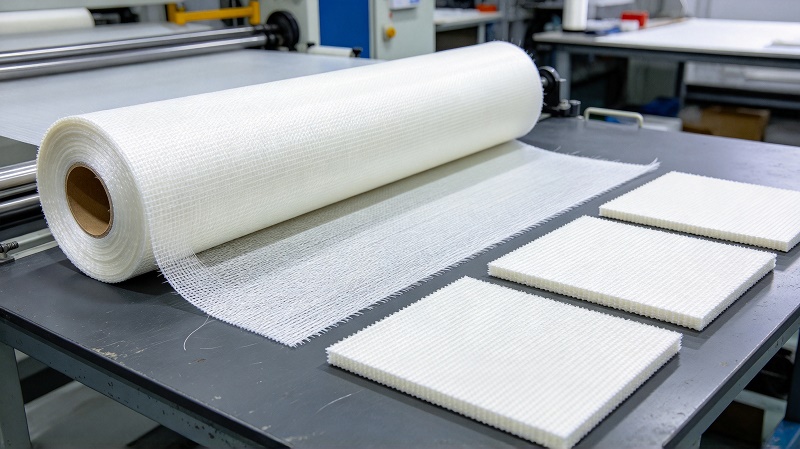
At Topweaving, we manufacture 3D fiberglass fabric from E-glass yarn with two surface deck layers connected by vertical fiberglass piles. The result is a monolithic sandwich preform that rebounds to a preset core height after resin is applied. This article explains what it is, where it is used, what benefits it delivers, and how to choose the right specification for your project.
Key Takeaways
3D Fiber Glass Fabric, also called 3D fiberglass fabric, 3D glass fibre fabric, 3D woven fiberglass or 3D sandwich fiberglass, has two face decks and vertical piles.
It creates a hollow core after resin impregnation, giving lightweight stiffness in one lamination step.
Main benefits: light weight, high stiffness, excellent delamination resistance, simple processing, easy curved shaping and customizable core height.
Common uses: double-wall underground tanks, leak-monitoring linings, marine decks, aircraft skins, transport panels, architectural cladding and industrial partitions.
Topweaving supplies E-glass 3D fabric in approximately 3–22 mm core heights, with technical support from raw yarn to finished woven fabric.
What Is 3D Fiber Glass Fabric?
3D Fiber Glass Fabric is a woven reinforcement, not a flat fiberglass cloth. It contains an upper deck, a lower deck and Z-direction piles woven between them. The decks carry in-plane loads, while the vertical piles keep the distance between faces and transfer shear. When you add thermoset resin such as vinyl ester, epoxy or polyester and roll lightly, capillary action wets the piles. The compressed fabric rebounds to its designed height and forms a hollow-core sandwich laminate.
Other acceptable names include 3D E-glass fabric, 3D spacer fiberglass fabric and integrally woven sandwich fabric. All describe the same idea: core and faces are made together, not assembled later.
Key Benefits of 3D Fiber Glass Fabric
Lightweight and high stiffness: Compared with chopped strand mat and glass roving fabrics of the same thickness, Topweaving 3D glass fibre fabric can be about 30–60% lighter while keeping strong rigidity.
Delamination resistance: Because piles are woven into both decks, the structure is integral. There is no separate adhesive core interface that can fail under impact or fatigue.
One-step lamination: The fabric can reach target thickness, for example 10 mm, 15 mm or 22 mm, without manual core placement. This saves labor, reduces material waste and shortens cycle time.
Easy curved and angled shapes: The fabric drapes around contoured surfaces better than many rigid sandwich systems, which helps domes, tank heads, vehicle panels and complex molds.
Hollow multifunctional core: The space between decks can stay empty, be filled with foam, or host sensors and wires. In tank linings, the interstitial space supports leak detection.
Design versatility: Pile density, pile height and deck construction can be adjusted to match mechanical, thermal or chemical requirements.
Main Uses of 3D Fiber Glass Fabric
Double-wall and underground tanks: 3–5 mm 3D fiberglass fabric is especially suitable for double-wall tank linings. After resin curing, it forms a continuous interstitial space for leak monitoring, secondary containment and corrosion protection. Topweaving recommends this structure for underground fuel storage because it reduces soil and groundwater contamination risk and can be installed with minimal tank downtime.
Marine: Decks, hatches, cabins, engine covers and swim platforms benefit from humidity resistance, light weight and good bonding to wood, steel or foam substrates.
Aerospace and aircraft: Fuselage panels, wing skins, propellers and flying surfaces use 3D woven fiberglass when integral stiffness and weight savings are required.
Transport and rail: Wallboards, partitions, toilet cabins, air deflectors and roof panels gain acoustic and thermal insulation plus lightweight rigidity.
Architecture and decoration: Marble backing panels, interior wallboards, exterior cladding and domes use the flat surface quality and configurable core thickness.
Industrial equipment: Sensor-integrated panels, insulated partitions and corrosion-resistant linings are easier to build with a single sandwich preform.
Specification Comparison Table
The table below shows representative Topweaving 3D Fiber Glass Fabric ranges. Actual weight varies by pile density and resin system.
| Model example | Core thickness | Face/deck thickness | Fabric weight approx. | Typical use |
|---|---|---|---|---|
| E3P / E3HP | 3.0–3.5 mm | 0.4 mm | 0.77–0.78 kg/m² | Double-wall tank lining, thin leak-monitoring layer |
| E5P | 5.0 mm | 0.4 mm | 0.83 kg/m² | Small tanks, curved linings, light panels |
| E10P | 10.0 mm | 0.6 mm | 1.34 kg/m² | Marine interiors, transport panels |
| E15P | 15.0 mm | 0.6 mm | 1.51 kg/m² | Architectural sandwich, insulated walls |
| E22P | 22.0 mm | 0.6 mm | 1.74 kg/m² | Large structural sandwich, aircraft/industrial panels |
Standard width in the listed series is 1.27 m, with roll lengths varying by thickness; custom pile height and width can be discussed with Topweaving engineers.
Why Choose Topweaving 3D Fiber Glass Fabric?
Topweaving controls production from raw material to woven fabric, which supports consistent deck quality, pile geometry and batch traceability. Our cross-disciplinary team provides requirement analysis, technical solution design, sample development, testing support, mass production, quality inspection and after-sales technical support. For double-wall tank projects, we can propose 3–5 mm 3D fiberglass fabric linings with interstitial leak-detection space, and for structural panels we can propose thicker E-glass 3D fabric sandwiches according to your resin, load and curvature requirements.
FAQ
Q1: What is the difference between 3D Fiber Glass Fabric and normal fiberglass cloth?
Normal cloth is flat and needs separate core materials. 3D fiberglass fabric already includes two decks and vertical piles, so it becomes a sandwich in one resin step.
Q2: Which thickness is best for double-wall tanks?
For many underground double-wall linings, 3–5 mm core 3D glass fibre fabric is preferred because it conforms to curves and forms a continuous interstitial leak-monitoring space.
Q3: Can 3D woven fiberglass be used with epoxy and vinyl ester?
Yes. Topweaving 3D fabric is commonly used with thermoset resins such as polyester, vinyl ester and epoxy; resin choice depends on chemical and temperature demands.
Q4: Is it suitable for curved surfaces?
Yes. The fabric drapes well around angles and contoured molds, which makes it useful for tank heads, domes and vehicle panels.
Q5: Why is delamination resistance better?
Vertical piles are woven into both decks, so the core and faces are integral rather than glued together.
Q6: How does Topweaving support custom orders?
We adjust pile height, pile density, deck construction, width and fabric weight, then provide samples and technical recommendations before mass production.
If you need a lightweight, leak-monitoring tank lining or a rigid yet formable sandwich panel, contact Topweaving for a tailored 3D Fiber Glass Fabric solution. Share your thickness, resin, load and application data, and our team will propose the optimum E-glass 3D fabric architecture with samples and production support.