



What is UHMWPE Fabric and Why is it So Strong
UHMWPE fabric, known for outstanding strength, uses ultra-high molecular weight polyethylene as its base. Its linear polymer chains reach molecular masses between 3.5 and 7.5 million amu, which sets it apart from other high-performance textiles. This structure gives UHMWPE remarkable resistance to abrasion, wear, and impact. The global market for UHMW-pe continues to grow, driven by demand in defense, healthcare, and industrial safety. Understanding UHMWPE helps industries and consumers select materials that offer superior protection and durability.
Characteristic UHMWPE Other Textiles Tensile Strength Highest Varies Abrasion Resistance 15x carbon steel Varies Molecular Mass 3.5--7.5 million Lower
Key Takeaways
UHMWPE fabric is incredibly strong, with tensile strength up to 10 gigapascals, making it ideal for protective gear and industrial applications.
The fabric's low friction coefficient enhances durability and efficiency, reducing wear on moving parts in machinery and equipment.
UHMWPE is lightweight yet tough, providing superior protection without added bulk, which is crucial for body armor and sports equipment.
Its excellent chemical resistance makes UHMWPE suitable for harsh environments, ensuring longevity in applications like food processing and biomedical devices.
Despite its many advantages, UHMWPE has a low melting point, so it should not be exposed to high temperatures to maintain its properties.
UHMWPE Fabric Overview
What is UHMWPE Fabric
UHMWPE fabric stands out in the world of high-performance textiles. Manufacturers create this material using ultra-high molecular weight polyethylene, which consists of extremely long chains of polyethylene molecules. These chains link together with strong covalent carbon-carbon bonds. The energy required to break these bonds reaches 335 kJ/mol, making the fabric exceptionally tough. UHMWPE fabric displays impressive properties, such as high tensile strength and resistance to abrasion. The orientation process during production aligns the molecules, which increases both the modulus of elasticity and the overall strength. UHMWPE fabric can reach tensile strengths up to 4 GPa and modulus values as high as 140 GPa. These properties make UHMWPE fabric a popular choice for demanding applications where durability and protection matter most.
Note: UHMWPE fabric offers a low coefficient of friction, which means it feels slick and resists wear even under heavy use.
Ultra-high molecular weight polyethylene provides more than just strength. The material also resists chemicals and moisture, which helps maintain its properties in harsh environments. UHMWPE fabric remains lightweight, so users benefit from protection without extra bulk. Many industries rely on UHMWPE for its unique combination of toughness and lightness.
UHMWPE Structure
The structure of ultra-high molecular weight polyethylene gives UHMWPE fabric its remarkable properties. The polymer chains in UHMWPE are linear and non-branching. This design allows the chains to pack closely together, forming dense microcrystalline regions. The high molecular weight polyethylene chains range from 3 million to 10 million g/mol, which leads to high entanglement and strong intermolecular forces.
| Feature | Description |
|---|---|
| High Molecular Weight | Ranges from 3 million to 10 million g/mol, leading to long molecular chains and high entanglement. |
| High Crystallinity | Typically over 85%, contributing to dense microcrystalline structures that enhance strength. |
| Strong Intermolecular Forces | Ultra-long chains increase molecular attraction, resulting in high melt viscosity and durability. |
Ultra-high-molecular-weight polyethylene achieves high crystallinity, often above 85%. This dense structure boosts the strength and durability of UHMWPE fabric. The strong intermolecular forces between chains result in high melt viscosity, which further improves the fabric’s resistance to wear and impact. These properties set UHMWPE apart from other high molecular weight polyethylene materials and make it a leader in protective textiles.
UHMWPE Fabric Properties
Strength-to-Weight Ratio
UHMWPE fabric stands out for its exceptional strength-to-weight ratio. Engineers and designers choose UHMWPE for applications where lightweight and high tensile strength are critical. The tensile strength of UHMWPE reaches values between 28.0 and 38 g/d, which surpasses most synthetic fibers.
| Material | Breaking Tenacity (g/d) |
|---|---|
| UHMWPE | 28.0 - 38 |
UHMWPE is recognized as the strongest fiber in the world. Its tensile strength is fifteen times greater than steel. UHMWPE is approximately eight times lighter than steel. On a weight-adjusted basis, UHMWPE fibers are about 71 times stronger than mild steel. This superior strength-to-weight ratio makes UHMWPE fabric ideal for body armor, aerospace, and other fields where lightweight protection is essential. The specific strength of UHMWPE also exceeds Kevlar and the strongest pearlitic steel wire by a significant margin. These excellent properties allow users to benefit from robust protection without sacrificing mobility.
Abrasion Resistance
UHMWPE fabric offers high abrasion resistance, which contributes to its excellent durability. The dense molecular structure and high crystallinity help the material withstand repeated friction and wear. Standardized abrasion tests show that UHMWPE fabric maintains its integrity even after extensive use.
| Structure Type | RPM (Martindale Tester) | RPM (Grinding Wheel) | Result |
|---|---|---|---|
| Plain Structure | 100,000 | 1,000 | No holes, fuzz observed |
| 2×4 Miss Structure | 50,000 | N/A | Fuzz and loop deformation |
| Polyamide Plain | 139 | N/A | Three holes after abrasion |
| Qualification Standard | >10,000 | N/A | Qualified for garments |
Nylon is identified as the most abrasion resistant fabric among UHMWPE, nylon, and polyester. Polyester has improved in abrasion resistance but generally has lower tear strength compared to nylon. Dyneema fabric, a type of UHMWPE, can be vulnerable to abrasion in certain constructions, such as tents. However, UHMWPE fabric still provides high cut resistance and impact resistance, making it suitable for protective gear and industrial applications.
Low Friction
UHMWPE fabric features a low coefficient of friction, which ranges from 0.08 to 0.12 in extruded products. This slickness reduces wear and improves the longevity of components in industrial settings. The low friction coefficient also enhances energy efficiency, as moving parts experience less resistance. Under specific conditions, UHMWPE can achieve even lower friction values, making it valuable for conveyor belts, bearings, and sliding surfaces. The combination of low friction and high tensile strength ensures that UHMWPE fabric performs well in demanding environments.
Reduced wear on moving parts
Improved energy efficiency
Enhanced impact resistance and toughness
Biocompatibility
The cytotoxicity of ULWPE extracts was graded 0--1 according to ISO 10993-5:1999, indicating very good cytocompatibility. The study demonstrated that ULWPE had excellent biocompatibility and biological safety, with wear resistance superior to UHMWPE. Various tests, including cytotoxicity, hemolysis, and toxicity assessments, confirmed that ULWPE is suitable for clinical applications as a surgical implant material.
UHMWPE fabric demonstrates excellent properties for medical use. Scientists have confirmed its biocompatibility through cytotoxicity and toxicity tests. UHMWPE is used in joint replacements, surgical implants, and other biomedical devices. Its chemical stability and wear resistance make it a reliable choice for long-term contact with human tissue. The material does not cause harmful reactions, which supports its use in healthcare.
Limitations (Low Melting Point)
UHMWPE fabric has some limitations, especially regarding heat resistance. The melting point of UHMWPE ranges from 130 to 136 °C (266 to 277 °F). Users should avoid exposing UHMWPE fibers to temperatures above 80 to 100 °C (176 to 212 °F) for extended periods. High temperatures can cause brittleness and reduce mechanical properties. The weak bonding between olefin molecules in UHMWPE results in poor heat resistance compared to other high-strength fibers. This limitation makes UHMWPE unsuitable for applications that involve high temperatures or require prolonged exposure to heat.
Melting point: 130--136 °C
Recommended maximum operating temperature: 80--100 °C
Not suitable for high-temperature environments
Despite these limitations, UHMWPE fabric remains a top choice for applications that require high tensile strength, impact resistance, lightweight, and excellent durability. Its chemical resistance and high cut resistance further enhance its value in protective and industrial uses.
UHMWPE vs Other Materials
UHMWPE vs Kevlar
UHMWPE fabric and Kevlar both serve as leading choices for protective textiles. Laboratory tests show that UHMWPE can reach tensile strengths up to 10 gigapascals, while Kevlar’s maximum is 3,620 megapascals. This means UHMWPE is stronger and more durable under stress. Engineers often select UHMWPE for applications that demand higher resistance to cracks and tears.
| Material | Tensile Strength (MPa) | Durability Comparison |
|---|---|---|
| UHMWPE | 4000 - 10000 | Higher resistance to cracks and tears |
| Kevlar | 3620 | Lower resistance compared to UHMWPE |
UHMWPE fibers like Spectra and Dyneema have resistance five times higher than Kevlar.
UHMWPE can stretch from 4 to 10 gigapascals, surpassing Kevlar’s tensile strength.
Cost also plays a role in material selection. Kevlar is generally more expensive than UHMWPE due to its complex manufacturing process and performance characteristics.
| Material | Cost Comparison |
|---|---|
| UHMWPE | Generally less expensive |
| Kevlar | Generally more expensive |
Tip: For industrial applications, UHMWPE fabric offers a balance of high strength and lower cost compared to Kevlar.
UHMWPE vs Nylon
UHMWPE and nylon differ in chemical resistance and durability. UHMWPE exhibits exceptional resistance to chemicals such as oils, acids, alkalis, and solvents. This property makes UHMWPE suitable for industries exposed to harsh substances. Nylon, on the other hand, can degrade over time when exposed to certain chemicals. UHMWPE also resists UV degradation better than nylon, which helps maintain its performance outdoors.
UHMWPE resists a wide variety of chemicals.
Nylon may degrade when exposed to acids or solvents.
UHMWPE maintains strength and durability in harsh environments.
UHMWPE vs Polyester
UHMWPE and polyester both appear in textile manufacturing, but they offer different benefits. UHMWPE is lightweight and provides a high strength-to-weight ratio. Polyester is heavier but known for resilience and color retention.
| Fabric Type | Flexibility Measurement Method | Weight Characteristics |
|---|---|---|
| UHMWPE | Automatic fabric stiffness meter | Lightweight, ideal for high strength-to-weight needs |
| Polyester | Not detailed | Durable, retains color, generally heavier than UHMWPE |
Polyester fabric resists wrinkles and retains shape.
UHMWPE fabric offers extreme moisture resistance and suits industrial uses.
Polyester dries quickly and is easy to dye.
UHMWPE fabric stands out for its combination of strength, chemical resistance, and lightweight properties. UHMW-pe continues to gain popularity in industries that require reliable and durable materials.
UHMWPE Applications
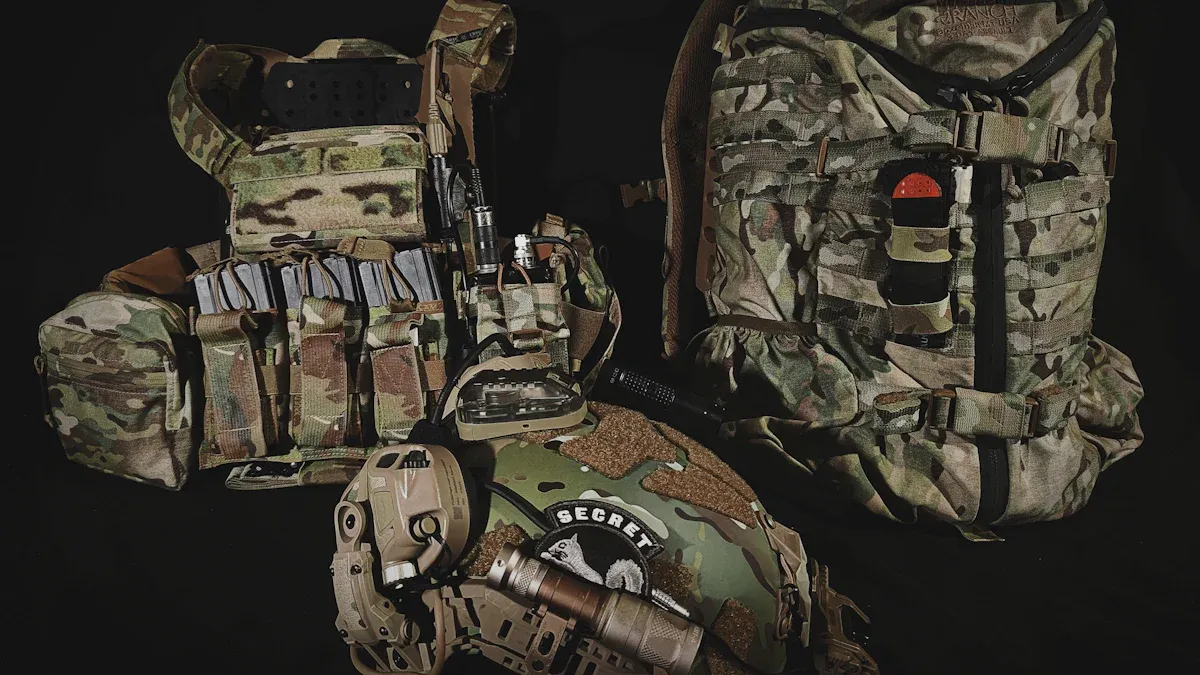
UHMWPE yarn has transformed many industries due to its unique characteristics and uses. The main applications of this high-performance synthetic fiber span protective gear, industrial equipment, sports gear, and biomedical devices.
Protective Gear
UHMWPE yarn is a top choice for protective clothing and body armor. Its high strength-to-weight ratio and flexibility provide superior protection without adding bulk. Body armor made with UHMWPE fabric offers enhanced ballistic resistance and comfort compared to traditional materials. The table below highlights key differences:
| Feature | UHMWPE Fabric | Traditional Materials (e.g., Kevlar) |
|---|---|---|
| Strength-to-Weight Ratio | Exceptional | Moderate |
| Ballistic Resistance | Enhanced | Standard |
| Flexibility and Comfort | Maintains flexibility and comfort | Limited flexibility |
Motorcycle clothing, helmets, and cut-resistant gloves often use UHMWPE yarn to protect users from impacts and abrasions.
Industrial Uses
UHMWPE yarn plays a vital role in industrial settings. Conveyor belts made with UHMW-pe benefit from low friction and high abrasion resistance. These properties ensure smooth operation and reduce wear on both the belt and transported materials. Key advantages include:
Smoother operations and decreased wear
Reduced maintenance and replacement costs
Self-lubricating surface minimizes the need for extra lubrication
UHMWPE yarn also appears in food processing, packaging, marine, and construction industries. Its durability and chemical resistance make it suitable for harsh environments.
Sports Equipment
Manufacturers use UHMWPE yarn in sports equipment for its strength and durability. Climbing ropes, fishing lines, and high-performance sails rely on this fiber.
One of its most significant advantages is its high strength-to-weight ratio, making it up to 15 times stronger than steel wire rope of the same weight. Another key advantage is its resistance to UV and chemicals, allowing it to endure harsh weather and exposure to saltwater without degrading.
The table below shows how UHMWPE yarn improves sports gear:
| Property | Description |
|---|---|
| High Strength | Stronger than traditional materials |
| Low Stretch | Maintains shape under heavy loads |
| Abrasion Resistance | Withstands rough outdoor conditions |
| Durability | Long-lasting performance in demanding environments |
Sports gear made with UHMWPE yarn is lightweight, resists tearing, and manages moisture well, making it ideal for athletes and outdoor enthusiasts.
Biomedical Uses
UHMWPE yarn is widely used in biomedical devices. Joint replacements and surgical implants benefit from its biocompatibility and wear resistance. Vitamin E-stabilized UHMWPEs show improved mechanical properties and resist oxidative degradation. Orthopedic surgeons recommend UHMWPE for hip and knee replacements due to its load-carrying capacity and longevity. Patients with UHMWPE-based implants experience fewer complications and a lower need for follow-up treatments. The material’s minimal toxicity and low wear rate contribute to better long-term outcomes.
UHMWPE fabric stands out in engineering for its strength, durability, and versatility. Industries rely on UHMWPE for:
Exceptional wear resistance and high impact strength
Chemical resistance and low moisture absorption
Lightweight comfort and superior ballistic performance
Easy machining and adaptability for engineering solutions
| Aspect | Details |
|---|---|
| Market Growth | Projected CAGR: 6.3% |
| Key Sectors | Defense, automotive, healthcare, engineering |
Experts see UHMWPE as a leader in smart textile engineering. For demanding applications, Topweaving offers reliable UHMWPE fabric with proven quality and expertise.
FAQ
What makes UHMWPE fabric unique compared to other textiles?
UHMWPE fabric stands out because it delivers the lowest friction among high-performance textiles. Its molecular structure creates a slick surface, which resists wear and abrasion. Many industries choose UHMWPE fabric for its strength and durability.
How does UHMWPE fabric achieve the lowest friction?
The linear polymer chains in UHMWPE fabric align tightly. This alignment produces the lowest friction, which allows moving parts to glide smoothly. Engineers rely on this property for conveyor belts and sliding surfaces.
Why is the lowest friction important for industrial applications?
The lowest friction reduces wear on machinery and equipment. Companies save money on maintenance and replacement parts. UHMWPE fabric helps machines run efficiently and extends their lifespan.
Can UHMWPE fabric with the lowest friction be used in sports equipment?
Manufacturers use UHMWPE fabric with the lowest friction in climbing ropes, fishing lines, and sails. Athletes benefit from gear that resists abrasion and maintains shape. The lowest friction also improves handling and performance.
Is UHMWPE fabric with the lowest friction safe for medical devices?
Medical experts trust UHMWPE fabric with the lowest friction for implants and joint replacements. The material does not react with body tissues. Patients experience fewer complications and longer-lasting results.